
Please share:

Monitoring, Surgery, or Radiotherapy for Prostate Cancer

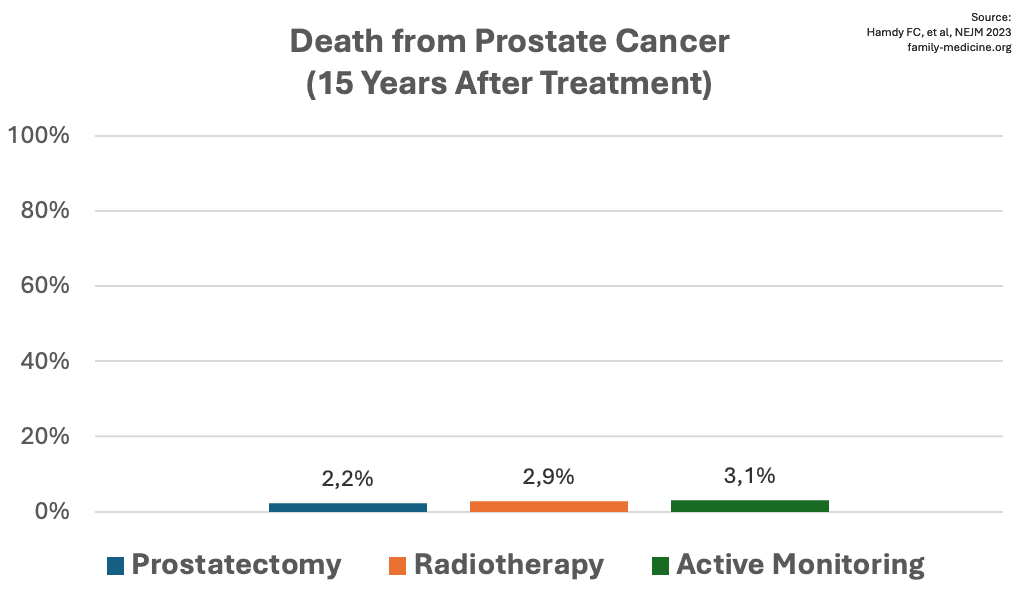
Published in the NEJM in 2023, this RCT recruited 1,643 patients from the UK aged 50-69 with localized prostate cancer. They received either prostatectomy, radiotherapy or active monitoring. Of course, patients could change treatment later (61% of those under active monitoring did so). After a median follow-up of 15 years, 356 men died, thereof “only” 45 from prostate cancer (13% of deaths). There was no significant difference (P=0.53) concerning death from prostate cancer between the three treatment options:
Other outcomes were significantly worse for active monitoring vs. prostatectomy/radiotherapy. Specifically, metastases developed in 9% vs. 5%, androgen deprivation therapy was initiated in 13% vs. 7%, and clinical progression occurred in 26% vs. 11%.

However, patient-reported outcomes were worse for radical prostatectomy, namely long-term urinary and sexual harms:
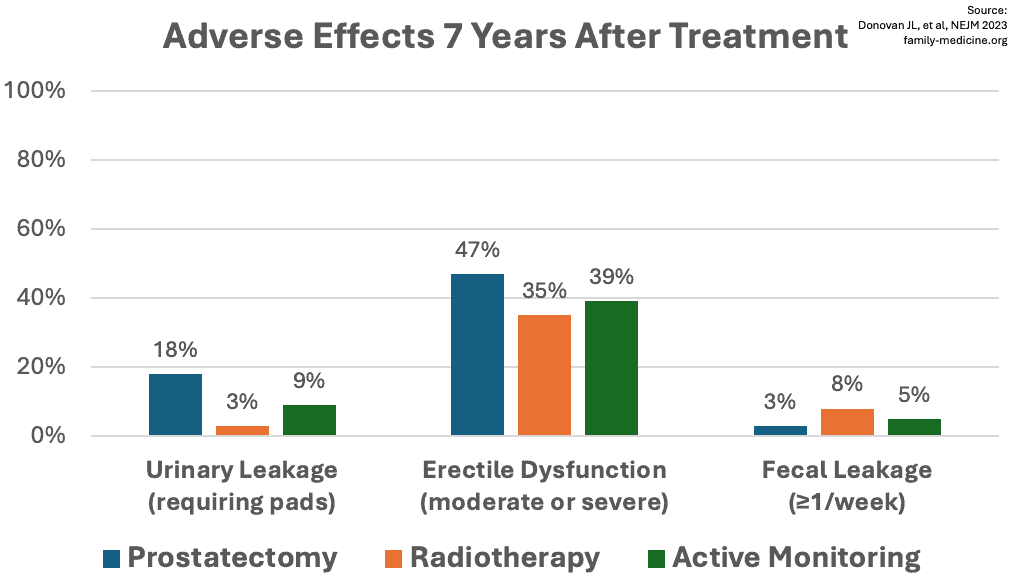
The study authors concluded that “patients newly diagnosed with localized prostate cancer should carefully consider the trade-offs between treatment harms and the risks of prostate cancer progression in the context of low cancer-specific mortality”.

Disclaimer: This site and its related services are for informational purposes only and do not provide medical advice. The use of any information provided is solely at your own risk. Neither the site owner nor site contributors can accept responsibility for any loss, damage or injury that arises from the use of this website or services. More information here.

Essential Updates
“exciting, practical, evidence-based, short”
2-min reads by & for GPs.
Free, no pharma money.

More Info & Sign-up.

More to explore

What Does “NNT” Mean and Why Should You Care?

An article explaining the essentials related to the Number Needed to Treat (NNT): how it’s calculated, why it’s crucial for clinical decision-making, the key factors influencing its interpretation, and common pitfalls every GP should recognize.

80% of Diagnosis is History Taking. Myth or Fact?

Most physicians accept that 80% of diagnosis is history taking, a statistic traced back to a 50-year-old BMJ study. Surprisingly, subsequent research confirms that medical history leads to the final diagnosis in roughly 76% to 79% of cases. Discover why listening to the patient remains the most effective technology in medicine.

Should We Screen for Atrial Fibrillation? ESC Says Yes (2024), Evidence Says…?

Despite recent trials showing no benefit and other bodies advising against it, new 2024 ESC guidelines recommend widespread atrial fibrillation screening. Let’s look at the evidence and other recommendations.
Obesity Management

Why Most Doctors Are Wrong About Obesity Management

Most doctors are managing obesity based on opinion, not on evidence. This easy-to-read summary of key studies might challenge your thinking and clinical practice…

Vitamin C for Fatigue? A 90-Year-Old Myth & The Current Evidence

Is high‑dose vitamin C the answer to chronic fatigue? The 1930s marketing campaign that sparked this belief still shapes patient requests today. This post unpacks the myth’s origins, reviews the latest evidence—from colds and wound healing to ME/CFS and cancer—and closes with practical counseling tips for family physicians. Spoiler: the data remain thinner than you might expect.

Discover more from Family Medicine Initiative

Subscribe now to keep reading and get access to the full archive.

Continue reading