


The question “Would I be surprised if this patient died in the next 12 months?” aims to identify patients at high risk of death who could benefit from palliative care. But how reliable is this subjective assessment?
A Systematic Review (2017) analyzed 17 studies on this topic. The result showed a sensitivity of 67% and a specificity of 80%. The authors concluded that the “Surprise Question” has poor to moderate accuracy in predicting death within the next 12 months. However, they emphasized that this question is neither “good” nor “bad” but should be supplemented with clinical indicators (which some palliative care scores already do).
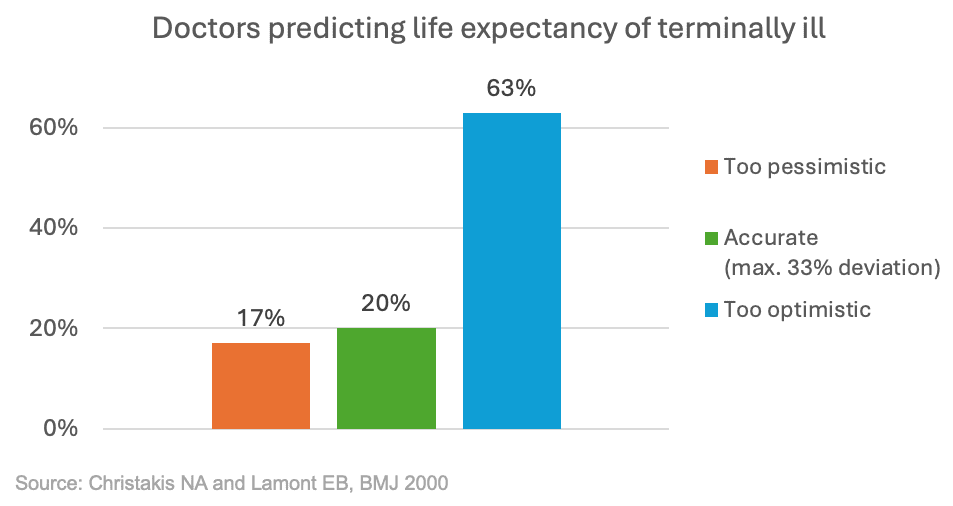
An older BMJ Studie (2000) surveyed 343 doctors on how long 468 terminally ill patients (at the time of their hospice referral; average age 69) were likely to live. The actual average survival time of these patients was 24 days. Although experienced doctors were more accurate, most were still off the mark:
Conclusion:
The “Surprise Question” is simple and quick, but it is often inaccurate. It seems that we doctors are not particularly good at intuitively assessing the risk of death, and we tend to be too optimistic.